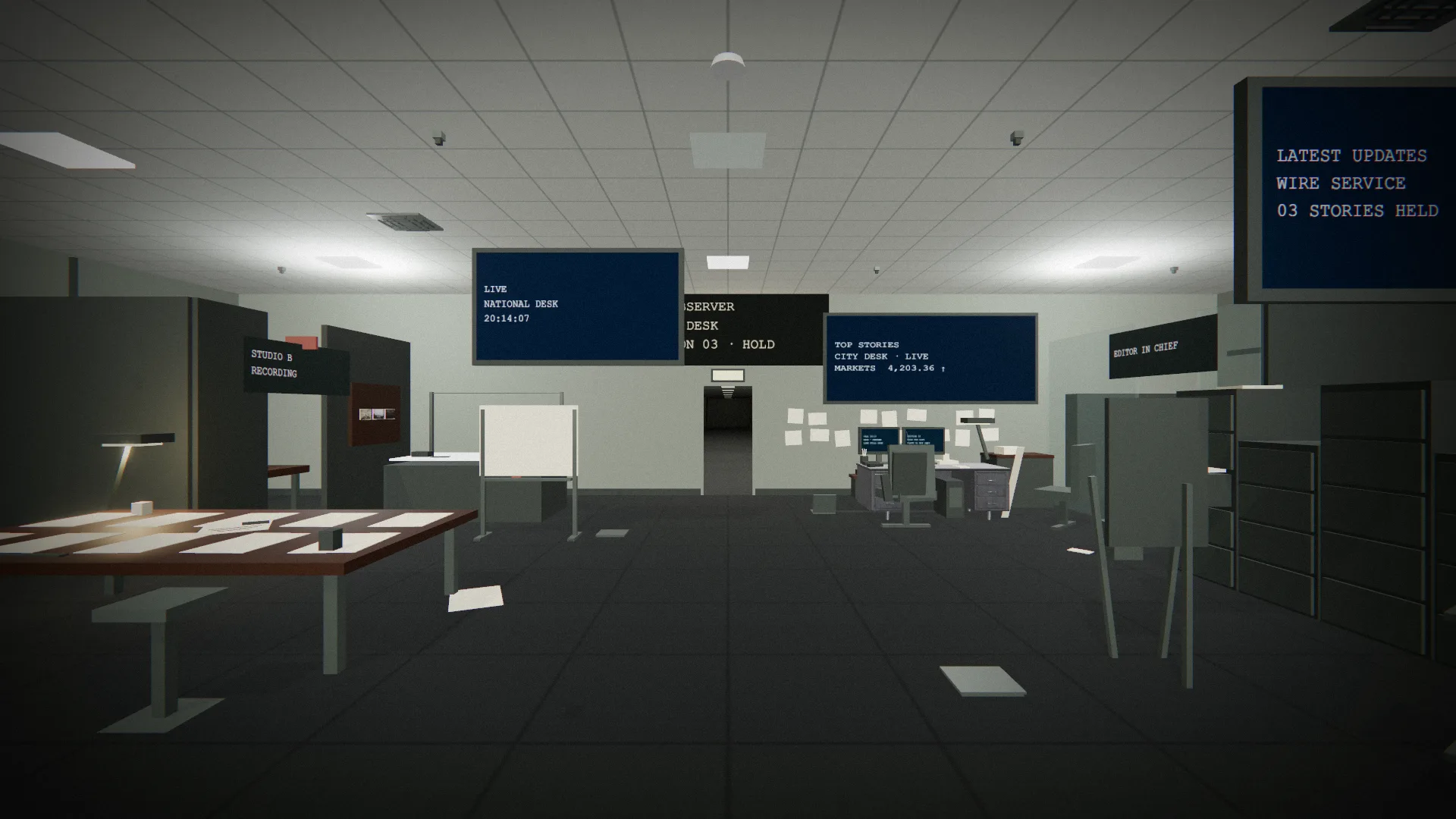
Tracehall Move the mouse to look
Entry 0000 An impossible archive
Walk into
the news
The building never deletes a room, but not every one still has a door. Walk until a door recognises you.
Behind the doors · 04 rooms
One real headline became each of these
-
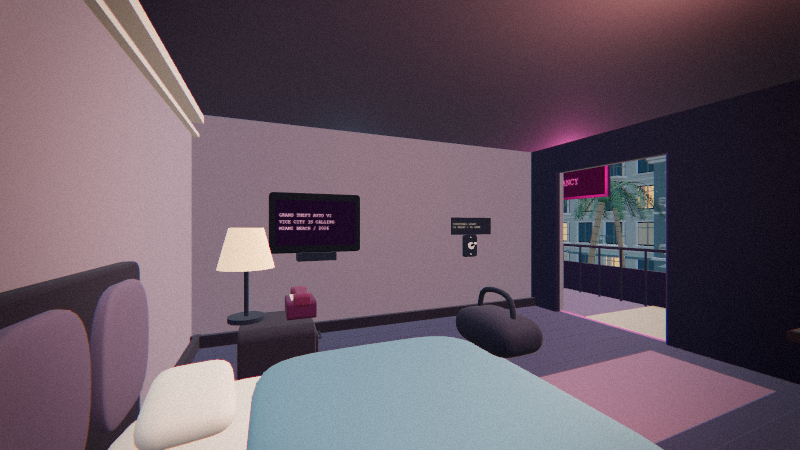
0004
CULTURE desk · 2026-09-25
Five Stars: a neon motel outside Vice City, with a case that sees six seconds ahead
MIAMI BEACH / GTA VI / REAL CITY. FICTIONAL DOUBLE.
-
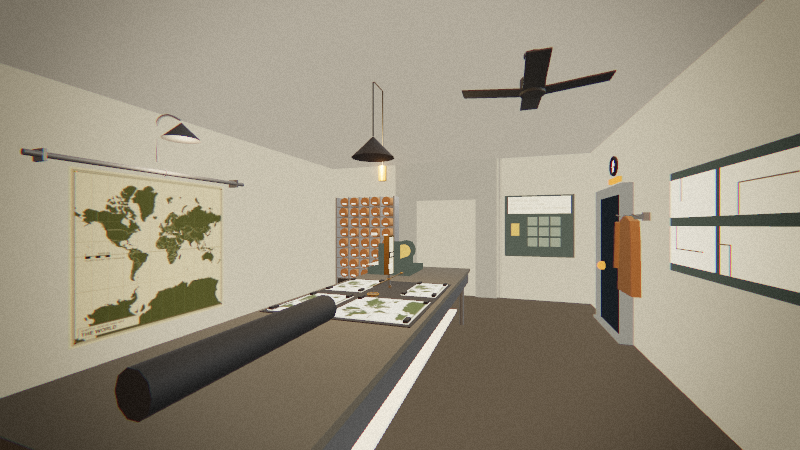
0003
WORLD desk · 2026-09-13
the drawing office of a school-map printer, the Friday the circular arrives
NEW WORLD MAP REFLECTS AFRICA'S TRUE SIZE
-
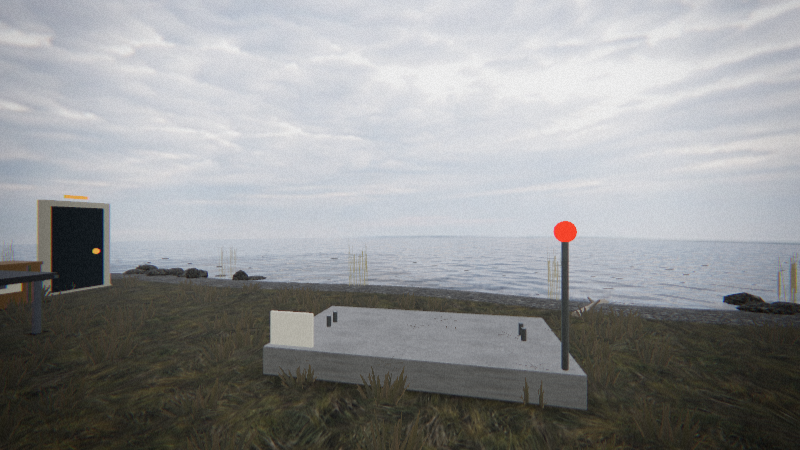
0002
POLITICS desk · 2026-08-30
A shoreline verge beside the highway into Canada, on the morning a giant Lake Ontario sign is put up by hand.
LAKE ONTARIO / NOW AND ALWAYS
-
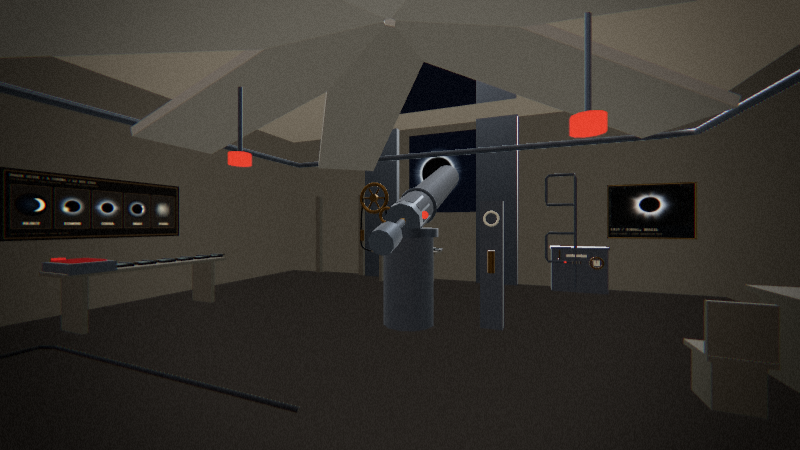
0001
SCIENCE desk · 2026-08-17
an observatory dome in A Coruña at second contact
20:27:41 second contact, 78 seconds, five glass plates
How a room is made
From the wire to a door, and nothing on the way is skipped
- One real news headline comes off the wire. One room is written from it.
- A model writes the room as data: the place, the things in it, what they do, what it sounds like. The trace it keeps, a few words of the real headline, is never shown to the room's own author.
- Eight layers check it before a single image is paid for. It has to compile, pass a gate over its own code, stay inside its budgets, be walkable, keep its lock honest and its sound declared, and render six ways in a real browser.
- Every room runs in a worker with no network and nothing to reach. What crosses to the page is data, never code.
- Six photographs of it are judged against a reference room. A room the critic marks down is refused a door.
- One deliberate command puts it behind a door, nearest the lobby. The forge never publishes on its own.
The hall
A corridor whose length is the project's age
Every room is a dead end off one corridor, ten doors to a floor, the newest nearest the lobby. A door plate carries the room's number and the day it was published, and the board in the lobby counts them.
Nothing the corridor has made is deleted. A room can lose its door, and some have: their files stay, the door does not. The hall is rebuilt from a manifest every time it opens, from one seed, the same geometry to the byte, so there is nothing to store and nothing to lose.
It runs in the browser: WebGPU where there is one, WebGL where there is not. No account, and nothing is saved between visits.